

BIM for Infrastructure Projects: Roads, Bridges & Railways
Learn how BIM is transforming roads, bridges, railways and infrastructure projects. Explore BIM benefits, software, workflows and training in Bangalore..
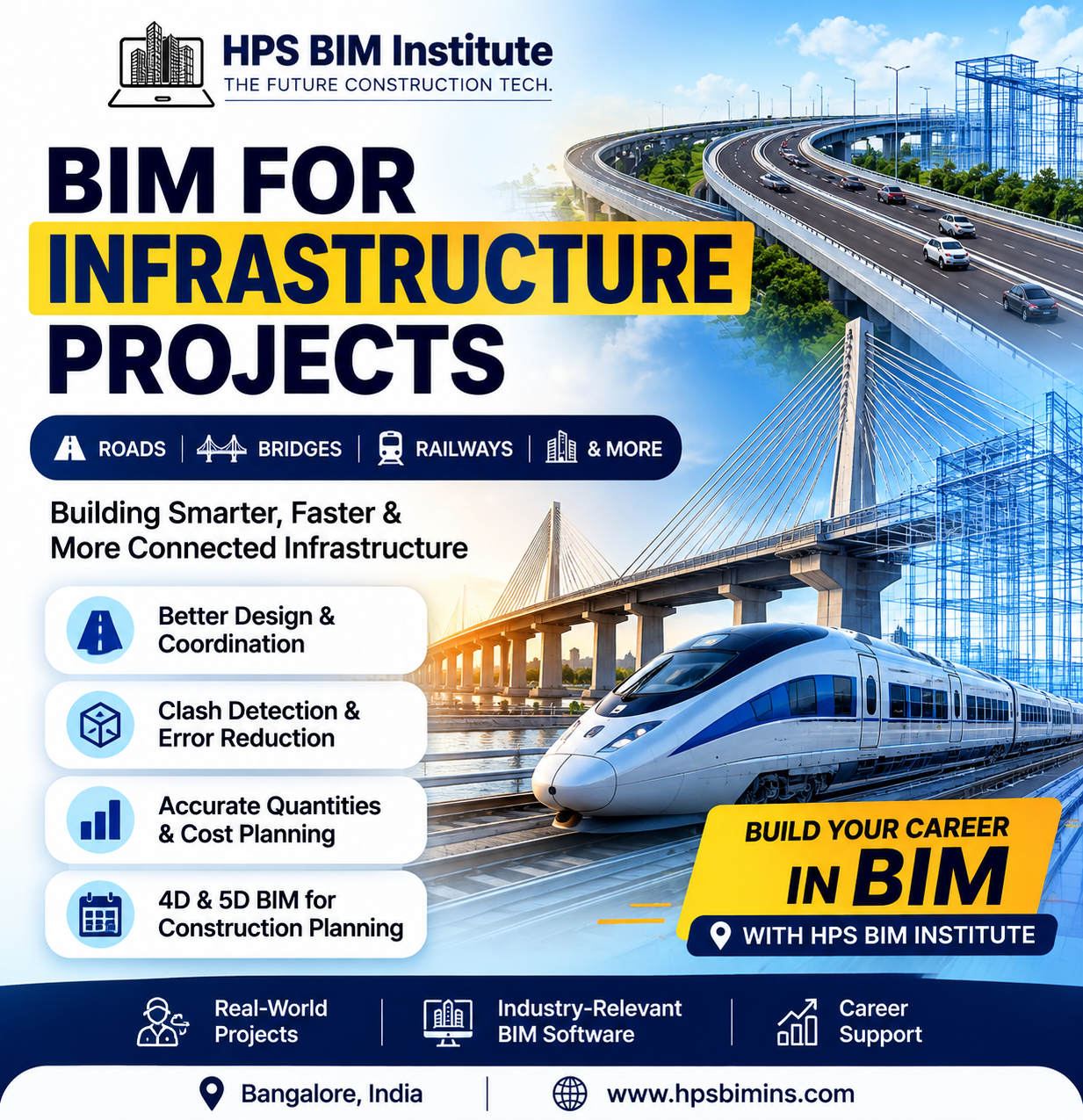
Published On : 18 Aug 2026
Discover how , and why BIM skills are becoming valuable for civil engineering professionals.BIM is transforming roads, bridges, railways, highways, and other infrastructure projects
Building Information Modeling (BIM) is no longer limited to building projects. Today, BIM for infrastructure projects is being used to improve design coordination, visualization, clash detection, quantity management, and construction planning.
For civil engineers and infrastructure professionals, learning BIM can open opportunities in modern digital construction and engineering workflows.
How Is BIM Used in Infrastructure Projects?
BIM helps create and manage digital models containing both geometric and project information.
BIM is commonly used for:
Roads and highways – alignment, corridors, surfaces, and drainage
Bridges – structural modeling and coordination
Railways and metros – track, station, structural, and utility coordination
Tunnels – geometry, structures, and construction planning
Infrastructure projects – clash detection, quantities, documentation, and coordination
For a broader introduction to BIM and its applications, you can also read our guide on BIM for Civil Engineers.
Benefits of BIM for Infrastructure
BIM can help infrastructure teams:
Improve multidisciplinary coordination
Identify clashes before construction
Visualize complex infrastructure in 3D
Improve quantity estimation
Support construction planning
Reduce design errors and rework
Improve communication between project teams
4D BIM can connect models with construction schedules, while 5D BIM can support cost-related workflows.
BIM Software for Infrastructure Projects
Depending on the project and specialization, professionals may use:
Civil 3D – roads, corridors, surfaces, and civil design
AutoCAD – drafting and documentation
Navisworks – coordination and clash detection
Revit – structural and building-related BIM
MicroStation – infrastructure design and documentation
Tekla Structures – structural BIM
Learning the right software combination along with practical project workflows is important for building an infrastructure BIM career.
You can also learn more about Revit training and BIM software skills in Bangalore.
BIM for Civil Engineers
Civil engineers can use BIM skills in roles such as:
Civil BIM Modeler
Structural BIM Modeler
BIM Engineer
BIM Coordinator
Infrastructure BIM Engineer
Civil 3D Designer
BIM/VDC Engineer
A combination of civil engineering knowledge, BIM software skills, coordination, and practical project experience can help professionals prepare for modern infrastructure projects.
If you're starting your BIM journey, explore the BIM Professional Basic Program for Civil Engineers at HPS BIM Institute.
How to Choose a BIM Training Institute in Bangalore
If you're looking for a BIM course in Bangalore, consider an institute that provides:
Practical project-based training
Industry-relevant BIM software
Clash detection and coordination
Civil and infrastructure workflows
Experienced trainers
Portfolio and career support
HPS BIM Institute offers BIM courses for civil engineers with training in tools such as Revit, Navisworks, AutoCAD and other BIM workflows.
For professionals looking for more advanced training, you can also explore the BIM Professional Master Program for Civil Engineers.
FAQ
What is BIM for infrastructure projects?
BIM for infrastructure is the use of digital models and project information for designing, coordinating, constructing, and managing roads, bridges, railways, highways, and other infrastructure.
How is BIM used in road projects?
BIM can support road alignment, corridor modeling, terrain, drainage, quantity management, visualization, and construction planning.
Can BIM be used for bridges?
Yes. BIM can support bridge modeling, structural coordination, clash detection, documentation, and construction planning.
Is BIM useful for civil engineers?
Yes. Civil engineers can use BIM skills for infrastructure design, structural modeling, coordination, construction planning, and digital project delivery.
Which BIM software should civil engineers learn?
Depending on their career path, civil engineers can learn Civil 3D, AutoCAD, Navisworks, Revit, MicroStation, or Tekla Structures.
Where can I learn BIM in Bangalore?
Students and professionals can explore BIM training institutes in Bangalore that provide practical software and project-based training. HPS BIM Institute offers BIM-focused programs for civil engineering and AEC professionals.
Conclusion
BIM is becoming an important part of modern infrastructure development. From roads and bridges to railways, metros, and tunnels, BIM helps project teams improve coordination, visualization, clash detection, and construction planning.
For civil engineers, learning BIM for infrastructure projects can be a valuable way to develop skills aligned with the digital transformation of the AEC industry.
If you're looking for a BIM course in Bangalore, focus on practical training, relevant software, and real-world project workflows.
Explore HPS BIM Institute and build practical BIM skills for the future of civil engineering and infrastructure.