
BIM Course for Civil Engineers | Build Your BIM Career
Learn BIM with a practical course for civil engineers. Master Revit, AutoCAD, Navisworks, BIM coordination and digital construction workflows at HPS BIM Institute..
Published On : 25 Sep 2026
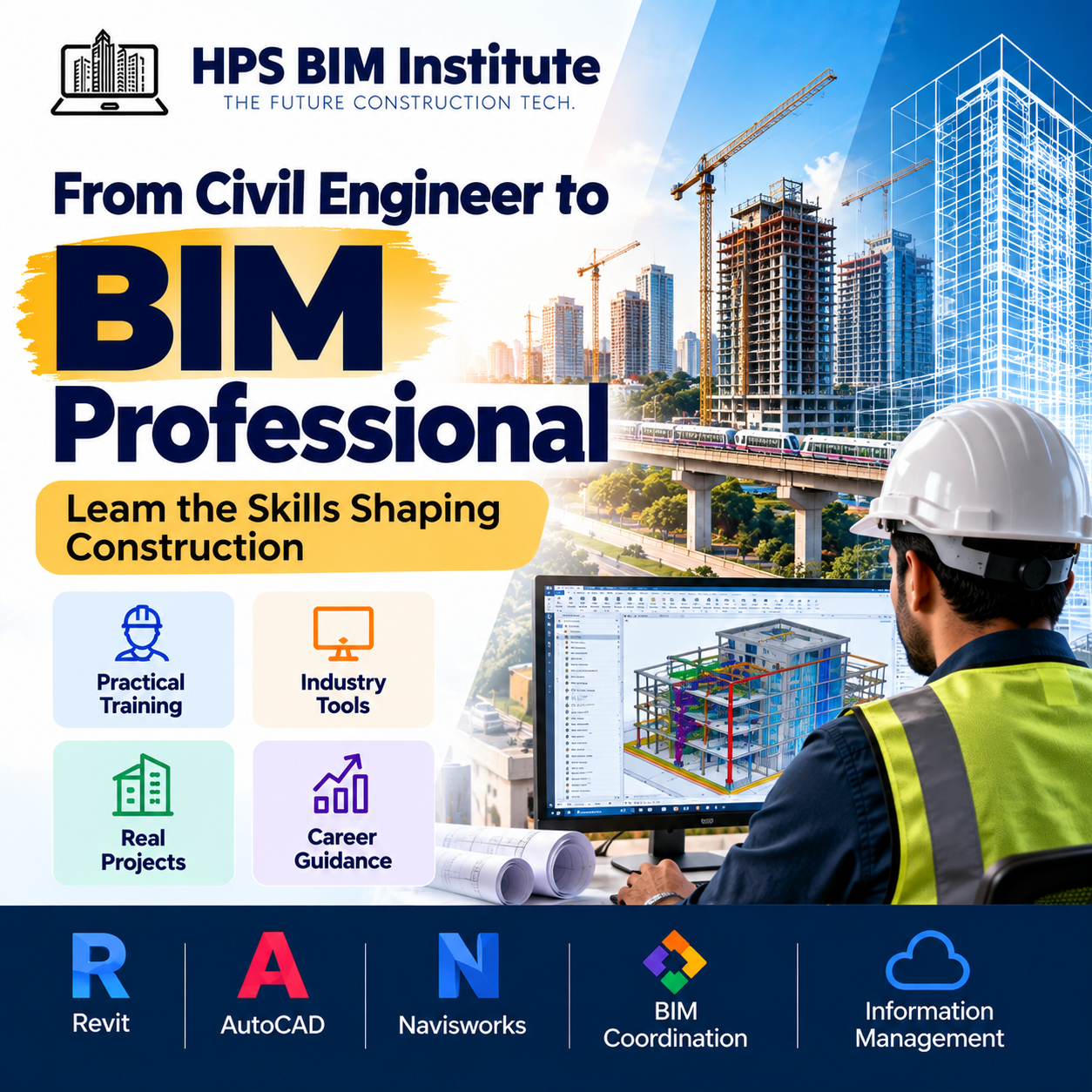
From Civil Engineer to BIM Professional: Learn the Skills Shaping Construction
The construction industry is moving from traditional drawings toward smarter, connected, and data-driven workflows. For civil engineers, this shift creates an opportunity to add powerful digital skills to their existing engineering knowledge.
A BIM course for civil engineers can help you understand how Building Information Modeling is used for design, coordination, documentation, and construction planning.
At HPS BIM Institute, the focus is on developing practical BIM skills that civil engineers can apply to modern AEC projects.
Why Should Civil Engineers Learn BIM?
Civil engineering knowledge provides a strong foundation, but today's projects increasingly require professionals who understand digital coordination and information management.
BIM training can help civil engineers learn to:
- Create and manage 3D building models
- Develop architectural and structural models
- Coordinate different disciplines
- Detect clashes before construction
- Prepare project documentation
- Understand quantities and project information
- Work with digital construction workflows
- Collaborate using Common Data Environments
The goal is not simply to learn software. It is to understand how BIM supports the complete project workflow.
What Makes a Good BIM Course for Civil Engineers?
Choosing the right training program is important. A strong BIM program should combine software knowledge with practical project applications.
Look for training that covers:
Revit Architecture & Structure
Revit is widely used for BIM-based modeling and documentation. Civil engineers can learn architectural modeling, structural modeling, reinforcement, documentation, families, views, schedules, and project setup.
AutoCAD
A solid understanding of CAD remains useful for drawings, drafting, and working with existing project information.
Navisworks & Clash Detection
Coordination is one of the important aspects of BIM. Navisworks can be used to review models and identify potential clashes between different building systems.
BIM Coordination
Learn how architectural, structural, and MEP models interact and how coordinated digital models support construction planning.
Information Management
Modern BIM is also about managing project information. Understanding information workflows, Common Data Environments, and BIM standards can help professionals move beyond basic modeling.
HPS's current civil-engineering BIM programs include tools and topics such as Revit, AutoCAD, Navisworks, ACC, BIM coordination, clash detection and Common Data Environment workflows. (HPS BIM Institute)
BIM Course for Civil Engineers: What Can You Learn?
A structured BIM course for civil engineers can take you through the journey from BIM fundamentals to practical project delivery.
At HPS BIM Institute, the civil-engineering curriculum includes:
- BIM fundamentals
- AutoCAD
- Revit Architecture
- Revit Structure
- Structural modeling
- Structural detailing
- Navisworks
- Clash detection
- BIM coordination
- 4D and 5D BIM concepts
- Common Data Environment
- Project-based learning
The exact modules can vary by program, so students should review the current curriculum before enrollment.
Basic BIM Training or Advanced BIM Training?
Your choice should depend on your current experience.
If you are new to BIM, a foundation-focused program can help you understand essential software and workflows.
HPS's BIM Professional Basic Program for Civil Engineers currently includes fundamental BIM, Revit, AutoCAD, structural workflows, Navisworks and related project concepts.
If you already have BIM experience and want deeper knowledge, the BIM Professional Master Program for Civil Engineers covers more advanced areas including Navisworks, plugins, Information Management and project work.
Can Civil Engineering Students Learn BIM?
Yes. BIM can be learned by civil engineering students as well as experienced professionals.
Starting BIM during college can help students become familiar with digital construction workflows before entering the industry.
Students can begin with:
- BIM fundamentals
- AutoCAD
- Revit
- Structural modeling
- Documentation
- Navisworks
- Clash detection
- Practical projects
Building a project portfolio alongside these skills can also help demonstrate practical knowledge during job applications.
Online BIM Course for Civil Engineers
Working professionals may prefer an online BIM course for civil engineers because it offers greater flexibility.
HPS BIM Institute currently provides online professional BIM programs. Its FAQ describes recorded learning resources during the week along with live weekend sessions for interaction and practical learning. (HPS BIM Institute FAQ)
When comparing online BIM training, check for:
- Live mentor sessions
- Practical assignments
- Project work
- Software training
- Learning resources
- Career guidance
- Interview preparation
What Career Paths Can BIM Skills Support?
BIM training can complement a civil engineering qualification and help professionals explore roles involving digital design and construction workflows.
Depending on your experience and portfolio, potential roles can include:
- BIM Modeler
- Revit Modeler
- BIM Coordinator
- Structural BIM Professional
- BIM Engineer
- BIM Project Support Professional
- Information Management roles
Job requirements vary between companies, so always check individual job descriptions for required qualifications and experience.
Why Choose HPS BIM Institute?
HPS BIM Institute offers BIM programs designed for different AEC disciplines, including civil, structural, electrical, mechanical, and MEP-related learning.
The institute highlights practical training, experienced mentors, project-based learning, career guidance, and interview preparation. (HPS BIM Institute)
Explore the complete BIM Courses at HPS BIM Institute to compare available programs.
Frequently Asked Questions
What is a BIM course for civil engineers?
A BIM course for civil engineers teaches Building Information Modeling concepts, digital modeling, project coordination, documentation, clash detection, and BIM software relevant to construction projects.
Is BIM a good skill for civil engineers?
BIM can complement traditional civil engineering knowledge by adding digital modeling, coordination, documentation, and information-management skills.
Which BIM software should civil engineers learn?
Common tools include Revit, AutoCAD and Navisworks. The right software depends on your specialization and the type of projects you want to work on.
Can a fresher learn BIM?
Yes. Civil engineering graduates and students can start with BIM fundamentals and gradually build software and project skills.
Is an online BIM course suitable for working civil engineers?
Online BIM training can be suitable for working professionals when it provides structured learning, mentor interaction, practical assignments, and project work.
What is the difference between BIM modeling and BIM coordination?
BIM modeling focuses on creating and developing digital models, while BIM coordination involves reviewing and coordinating models from different disciplines to identify and resolve potential conflicts.
Does HPS BIM Institute offer BIM courses for civil engineers?
Yes. HPS BIM Institute offers civil-engineering-focused BIM programs, including its Basic and Master programs. (HPS BIM Institute)
Build Your BIM Skills With HPS
The future of construction is becoming increasingly digital. For civil engineers, learning BIM can be a way to combine engineering knowledge with modern digital construction skills.
Whether you are a civil engineering student, fresher, or working professional, choose training that gives you more than software commands. Look for practical projects, coordination skills, industry workflows, mentoring, and portfolio development.
Ready to take the next step?
Explore HPS BIM Institute's BIM programs and start building the skills needed for the evolving AEC industry.